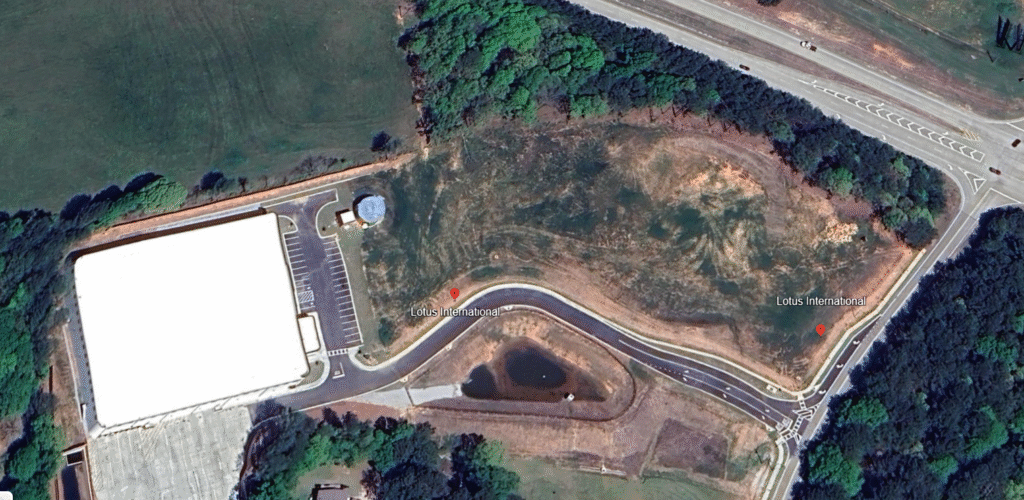
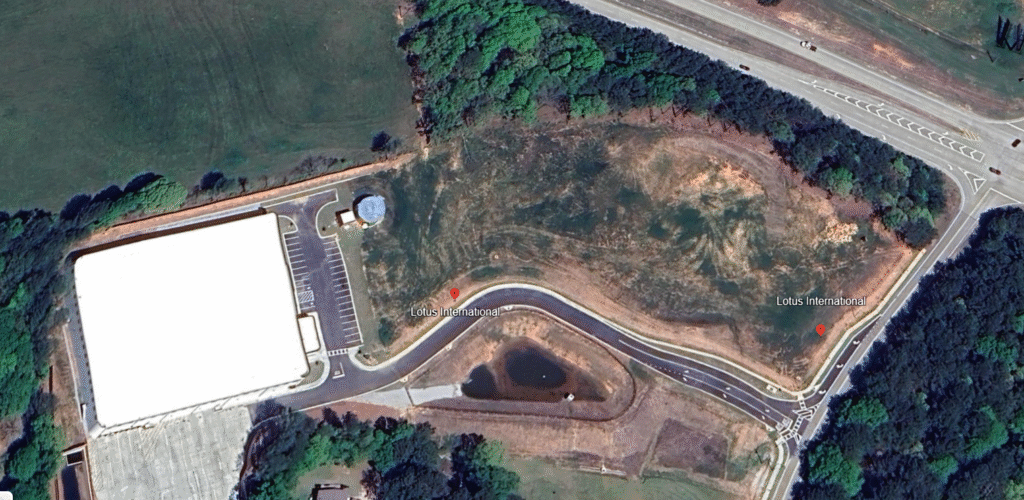
Lotus International | Winder, GA
Site selection is never just about the building. It’s about access, labor, logistics, and long-term growth. For many companies, especially those that need space for warehousing and distribution, the best opportunities are often outside dense urban cores—where land is available, costs are manageable, and expansion is realistic.
Lotus International’s project in Winder, Georgia is a great example of that strategy. The location offers strong practical advantages: it’s close to major highway access for regional distribution and trucking, and it sits within reach of a large workforce pool—a key factor for warehouse operations that depend on reliable staffing and flexible shift coverage.
But there’s a common tradeoff with “infrastructure-light” sites like this: the municipal utilities may not be sized for every aspect of a modern facility—especially fire protection.
On this project, the available municipal water infrastructure wasn’t sufficient to support the building’s fire sprinkler system demand. Rather than delaying the project or pursuing major public utility upgrades, the team implemented a proven solution: on-site fire-protection water storage and pumping, designed to meet applicable standards and satisfy code requirements.
Georgia Water Tanks delivered the critical piece: a 80,000 gallon NFPA 22-compliant fire water storage tank and controls, purpose-built for the site and integrated with the building’s fire protection system.
The site advantage: logistics + labor, without the urban constraints
Industrial and distribution facilities live or die by efficiency. A building can be perfect on paper, but if trucks can’t move easily, if staffing is a struggle, or if future growth is boxed in, operational costs rise quickly.
Winder checks a lot of boxes for businesses expanding in the Atlanta region:
- Highway proximity supports inbound freight and outbound deliveries without pushing every truck through dense city traffic.
- Workforce access matters for hiring, retention, and scaling operations over time.
- Available land creates options for building layout, trailer storage, and future additions.
This is exactly why companies choose locations like Winder—because the site can support real operational growth.
But those advantages don’t always come with “big city utilities,” and fire protection is where that gap often shows up first.
The challenge: municipal supply that can’t meet sprinkler demand
Fire sprinkler systems are designed around worst-case scenarios, not everyday usage. They require specific flows and durations during a fire event. Even if a municipal system provides adequate pressure for domestic use, it may not have enough capacity to meet sprinkler demand—especially for larger buildings or facilities with specific hazard classifications.
When municipal supply falls short, the options can be painful:
- fund or wait on utility upgrades (time-consuming, expensive, and not always feasible), or
- create a private, code-compliant fire water supply on site.
For Lotus International, on-site storage was the clear, schedule-friendly path: it provides a dependable source of water for the sprinkler system without relying on uncertain municipal improvement timelines.
The solution: NFPA 22-compliant storage + pumping, integrated with the fire system
Georgia Water Tanks supplied and commissioned a fire-protection water storage tank and controls designed specifically for this facility. The tank met the requirements of NFPA 22 (Standard for Water Tanks for Private Fire Protection)—a widely recognized benchmark that guides how private fire water tanks are designed, built, and equipped.
To complete the system, Fire Sprinkler of Atlanta installed the fire pump, which provides the required pressure and performance for the sprinkler system during a fire event. Together, the tank + controls + fire pump create a robust, purpose-built fire protection water supply.
This setup does two important things:
- Guarantees available water volume for the sprinkler system, independent of municipal limitations
- Delivers the water at the required pressure, using the fire pump and appropriate controls
In plain terms: it makes the building feasible on a site where the municipal infrastructure alone would have limited or delayed development.
Fast execution: from concept to a standing tank in about four months
One of the most important parts of this project wasn’t just the final equipment—it was how quickly the solution moved from idea to reality.
This tank was not an off-the-shelf workaround. It was:
- Designed and engineered to match the project’s fire protection requirements
- Reviewed and approved by the project design team and the local code officials
- Custom manufactured to meet the project’s specifications
- Delivered and erected on site in about four months
That matters, because construction schedules don’t pause while the utility grid catches up. If a project needs fire protection to proceed—whether for permitting, insurance, or occupancy—then the fire water solution has to keep pace with the overall build.
This is where experienced coordination makes a difference: design alignment, code compliance, fabrication, and field erection all have to work as one chain. If any link slips, the schedule slips. On this project, the system was developed and executed on a timeline that supported the facility’s broader goals.
Why this matters: enabling economic development without waiting on infrastructure
Projects like Lotus International’s Winder facility highlight a reality that rural and semi-rural communities face all the time: land is available and the workforce is there, but utility infrastructure may not be sized for modern commercial requirements—especially fire protection.
When municipal water supply can’t meet sprinkler demand, the default assumption is often that the project will require costly, time-consuming public infrastructure upgrades (larger mains, storage, booster stations, etc.). Sometimes those upgrades are warranted—but they can also delay projects for months or years, and they aren’t always financially realistic for a single development.
An on-site, standards-based fire protection water supply changes that equation. By pairing an NFPA 22-compliant fire water storage tank with proper pumping and controls, a project can move forward safely and to code without placing a major new burden on public infrastructure.
That matters because it helps communities capture the benefits of development sooner:
- Jobs and local hiring
- Increased tax base
- More viable use of rural industrial land
- Growth without requiring immediate, large-scale utility expansions
In short: solutions like this help businesses invest in rural areas while keeping the overall project practical—for the owner, the design team, and the community.
The takeaway
Lotus International’s Winder, GA project highlights a practical truth about growth: great sites aren’t always fully served by big-city infrastructure, and successful projects plan accordingly. The location offers real operational strengths—highway access and a strong workforce pool—and the fire protection solution ensured the site could support a modern facility.
Georgia Water Tanks supplied the NFPA 22-compliant fire water storage tank and controls, and Fire Sprinkler of Atlanta installed the fire pump. The result is a reliable, standards-based fire protection water supply—designed, approved, custom manufactured, and erected in about four months—that helped the project move forward without requiring major municipal water infrastructure upgrades.
It’s a good example of how rural communities can support new employers and growth without waiting on expensive utility expansions.