1) “We run out of water right when we need it”
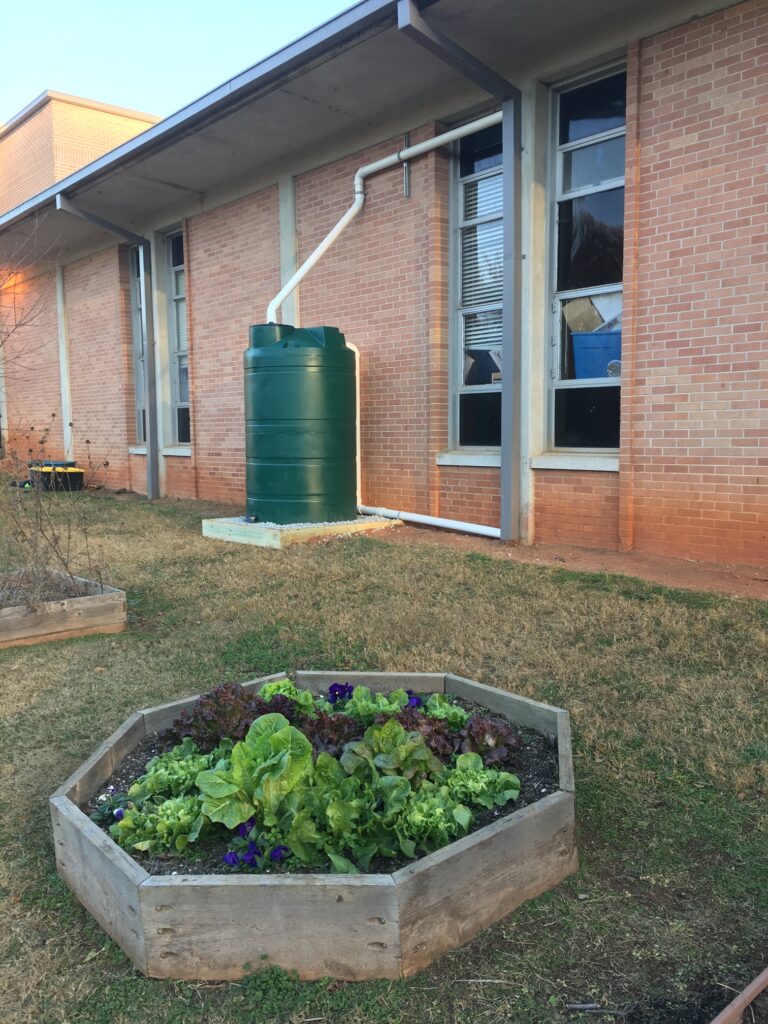
- Usually caused by undersized storage, or not enough catchment area. We recommend 1 s.f. of collection surface for each s.f. of garden, with 1 gallon of storage in between. The 1:1:1 ratio.
- Tanks empty fast in dry spells; gardens still need municipal water as a backup. If that’s not possible, consider doubling the storage.
- Quick math: every inch of rain yields about 0.6 gallons per square foot of roof, so 1,000 s.f. of catchment produces roughly 600 gallons per inch of rainfall. UGA Extension publishes a rainwater harvesting bulletin for designers and contractors if you want the background, and our design pages show how the numbers play out on real sites.
2) Overflow, erosion, or flooding near the tank
- Water dumps next to foundations/beds, washes mulch, creates mud ruts
- Usually caused by poor overflow routing, clogged outlets, or undersized overflow plumbing.
- Fix it by sizing the overflow at least as large as the inlet, then sending it to daylight, a screened popup emitter, or a dry well sized for your roof — never straight at the foundation.
3) Clogged gutters/screens/filters → low flow, messy maintenance
- Slow filling, water bypassing the barrel, pump starving, drip emitters clogging
- Most often leaf litter + roof grit + Georgia pollen; screens just need a simple cleaning routine.
- Add a self-cleaning prefilter, such as the Leafeater Advanced, available on Amazon or georgiawatertanks.com
4) Mosquito complaints (the #1 “neighbor issue”)
- Happens when lids/vents/overflows aren’t screened, or water sits in first-flush chambers and piping
- The Georgia Department of Public Health specifically calls out standing water in containers like rain barrels as a breeding risk; prevention focuses on eliminating or protecting standing water.
- Most industry insiders do not recommend first flush devices anymore. Instead, use a self-cleaning prefilter, and either a screened overflow elbow or popup emitter.
5) Algae, slime, and funky odor
- Green water, slippery biofilm, musty smell, stained hoses/emitters
- Usually from sunlight hitting the stored water + warm temps + organic debris (tiny amounts add up).
- Solution: 100% screened prefilter.
Block 100% of light.
6) Community garden–specific: user error & durability issues
- Valves left open, hoses disappear, fittings broken, contamination from “helpful” additions
Shared systems benefit from simple instructions, protected components, and fewer ways to misuse (think: lockable spigots and labeled valves). We go deeper into shared setups on our community garden rainwater harvesting page. Troubleshooting a system you already own? Send us your roof size, tank size, and a photo or two through our quote request form, and we will tell you what to fix first.